
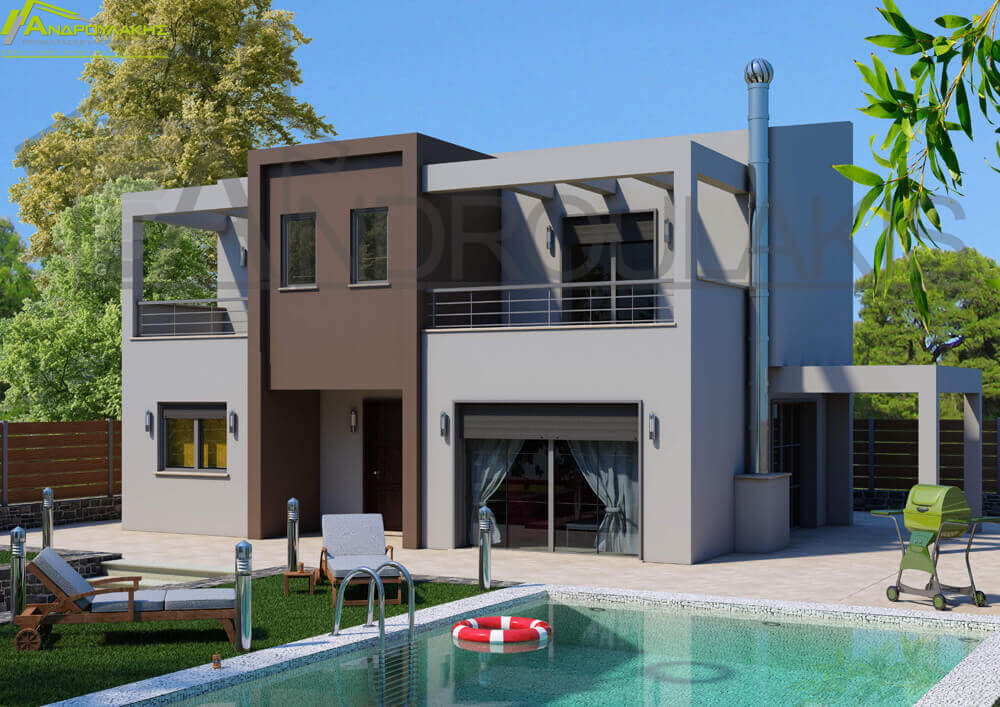
Ecological House – Definition
An ecological house is defined as a building with high environmental performance, whose design and construction are based on principles of sustainability, minimizing carbon footprint, and optimizing energy efficiency.
It uses certified low-embodied-energy materials, applies bioclimatic strategies (orientation, natural lighting, passive heating/cooling), features high thermal insulation and airtightness, controls humidity and thermal bridges, and incorporates resource-saving technologies such as mechanical ventilation with heat recovery, water management, and renewable energy systems.
Its goal is to minimize primary energy use, ensure healthy indoor air quality, achieve long-term durability, and reduce the environmental impact throughout the building’s lifecycle.
Our Primary Goal
Our primary goal in designing a home is to use ecological and human-friendly materials while consuming the minimal possible amount of energy.
Androulakis homes are built from certified ecological materials, fully compliant with European regulations and EU standards.
The construction of modern, certified ecological buildings is a highly demanding process that requires comprehensive planning, adherence to best practices, careful material selection, and detailed design. Androulakis has carried out a six-month reorganization of its building systems, based on studies and data from the Zero Tool and the Hellenic Passive House Institute.
Durability of Materials
The durability of materials is one of the fundamental principles guiding our construction systems, as it directly affects the building’s lifespan. The longer the lifespan of a low-energy building, the lower the environmental impact of its materials.
During the design process, we take into account all critical elements: airtightness, insulation, potential moisture paths, thermal bridges, and embodied energy. Combined with the shape and positioning of walls, floors, and roof, all of these contribute to creating an indoor environment with clean, fresh air, free from dust, allergens, humidity, and mold — a truly ecological and healthy home.
ANTIALLERGENIC DESIGN
Anti-allergenic design requires particular care and specialized study. The materials we use are ecological, certified, and free of chemical additives. The building is designed to avoid pockets of trapped air, thermal bridges, and condensation phenomena on the interior and exterior surfaces of walls or the roof.
Humidity in interior spaces is a serious risk factor for individuals with respiratory problems or allergies.
Materials and expertise together form the two fundamental elements for creating a truly modern, healthy, and comfortable home.