ECO SMART FORM SYSTEM – ICF

icfnew

ICF Technology: The Process

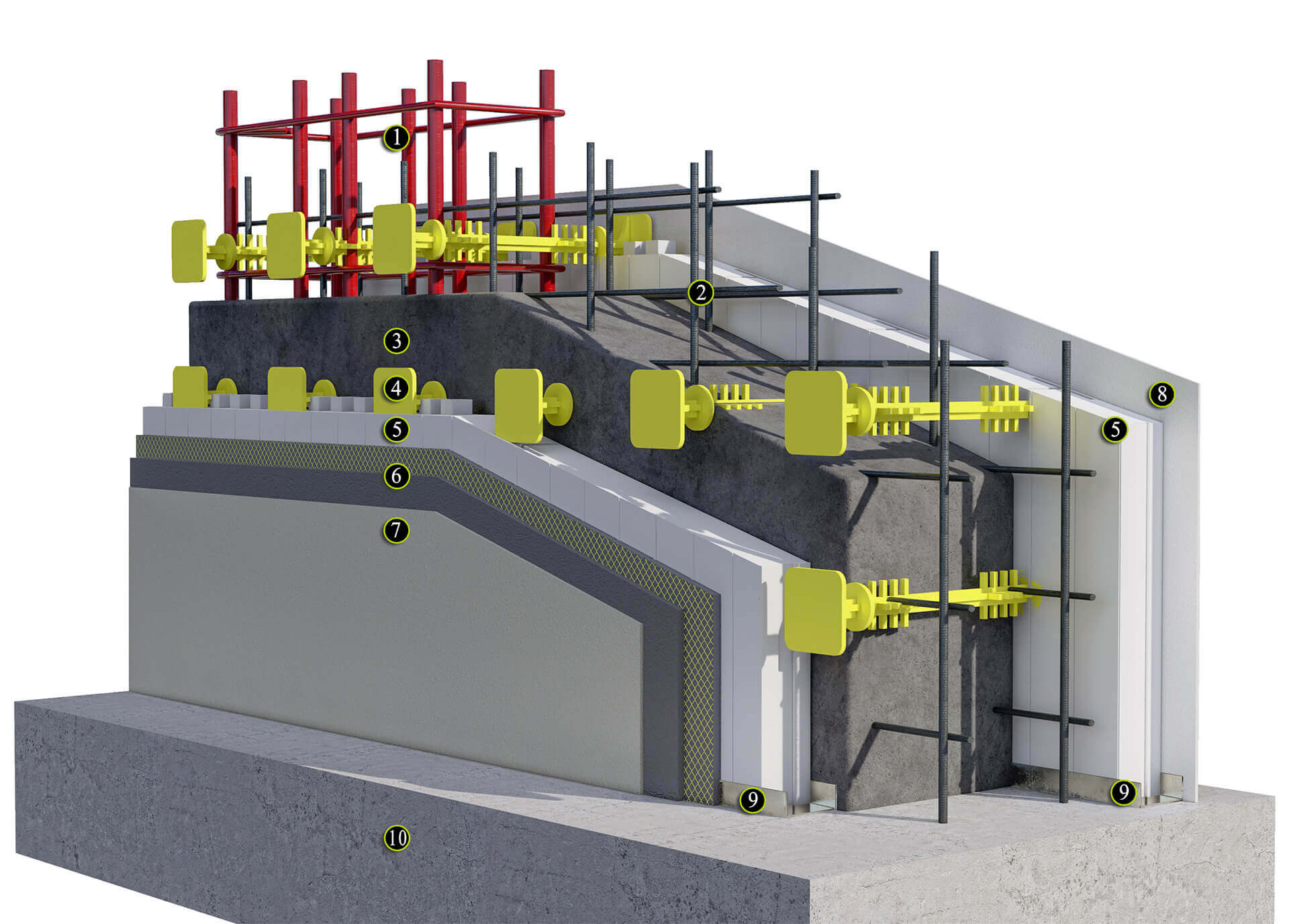
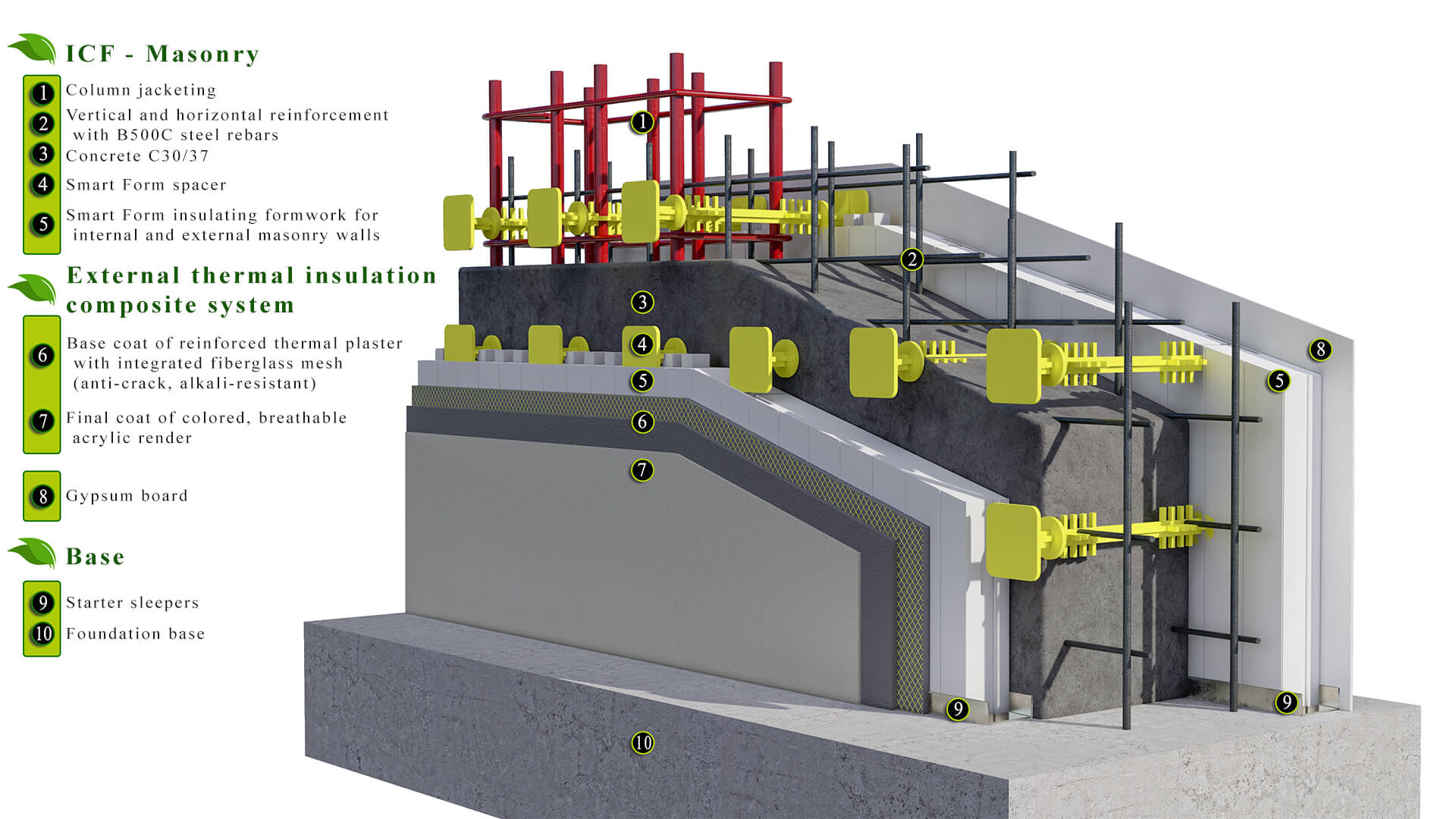
ICF is a high-performance thermal insulating formwork that replaces traditional timber formwork and consists of two sheets of expanded polystyrene EPS 250 with a thickness of 8.20 cm.

The insulating forms are assembled on site, installed in a staggered arrangement, and connected to each other using PVC spacers, which are placed on the sheets, forming a rectangular cavity of 25 cm.

This cavity is then reinforced with B500C steel, according to the structural requirements, and finally poured with C25/30 concrete.

WHY ICF IS THE FUTURE OF CONVENTIONAL CONSTRUCTION

  • Reduced construction time
    ICF formwork is a permanent formwork; therefore, there is no need to wait for the concrete to cure, and the entire stripping process is eliminated.
  • The formwork itself functions as excellent thermal insulation
    There is no cost for materials that are later discarded, as happens with traditional timber formwork.
  • Concrete is not left exposed
    After formwork installation, we are not dealing with bare concrete that requires additional insulation, but with a formwork system that is already fully thermally insulated.
  • Replaces brick construction
    The more individual components a building consists of, the more vulnerable it becomes to seismic activity. For this reason, brick construction is considered an outdated and unsafe building method, surpassed by modern international construction standards.
    ICF, on the contrary, creates a unified, compact, monolithic (single-block) structure, making it fully earthquake-resistant.
  • Unlimited design possibilities and multi-storey construction
    The ICF system can be shaped very easily, making it possible to implement any architectural requirement.

WHY ANDROULAKIS ICF

We use expanded polystyrene EPS 250.

  • We therefore achieve higher density (EPS 250, 35 kg/m³), which provides increased mechanical strength to the structural project.

We use greater thickness (8.20 cm), thus providing the best thermal insulation coefficient in its category.

We use greater length (1.20 m).

  • This increases construction speed and ensures better alignment of the wall elements.

Androulakis ICF technology corresponds to Energy Class A homes, and the energy classification of ICF residences is determined by the calculation software of the regulation (KENAK).


See here detailed construction materials, information, and their characteristics.


Material Certifications

ICF Technology: The Process

ANDROULAKIS ECO SMARTFORM SYSTEM MASONRIES

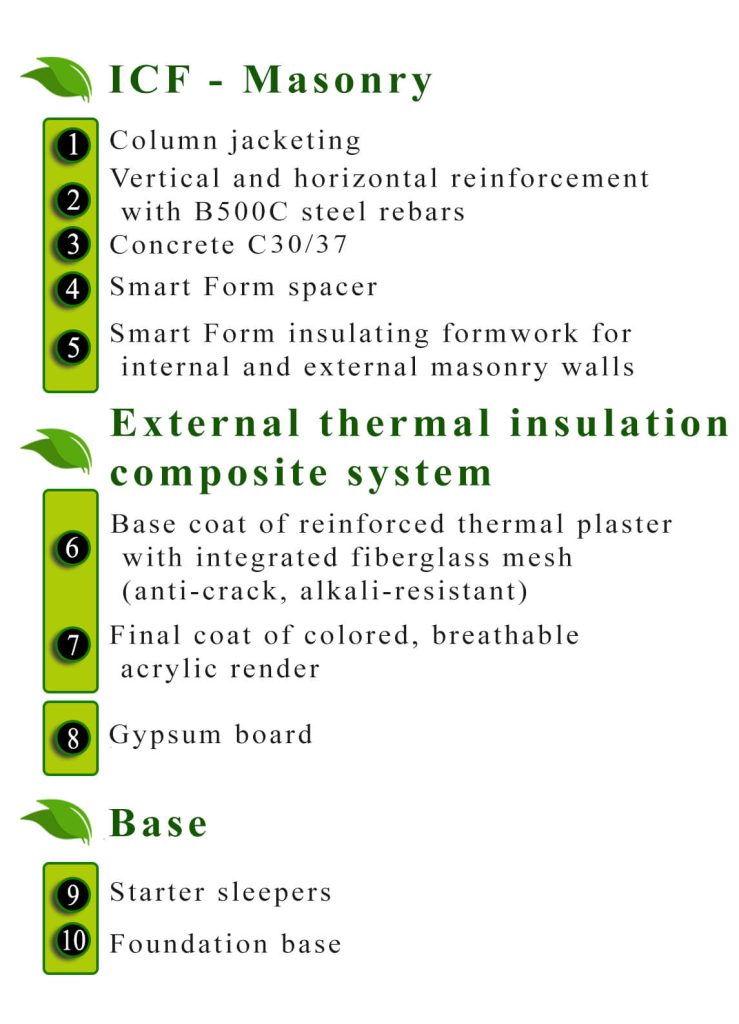
EXTERIOR WALL – ICF

U = 0.19 W/m²K
Innovative reinforced concrete thermal insulating formwork 400 mm
with a thermal transmittance coefficient U = 0.19 W/m²K

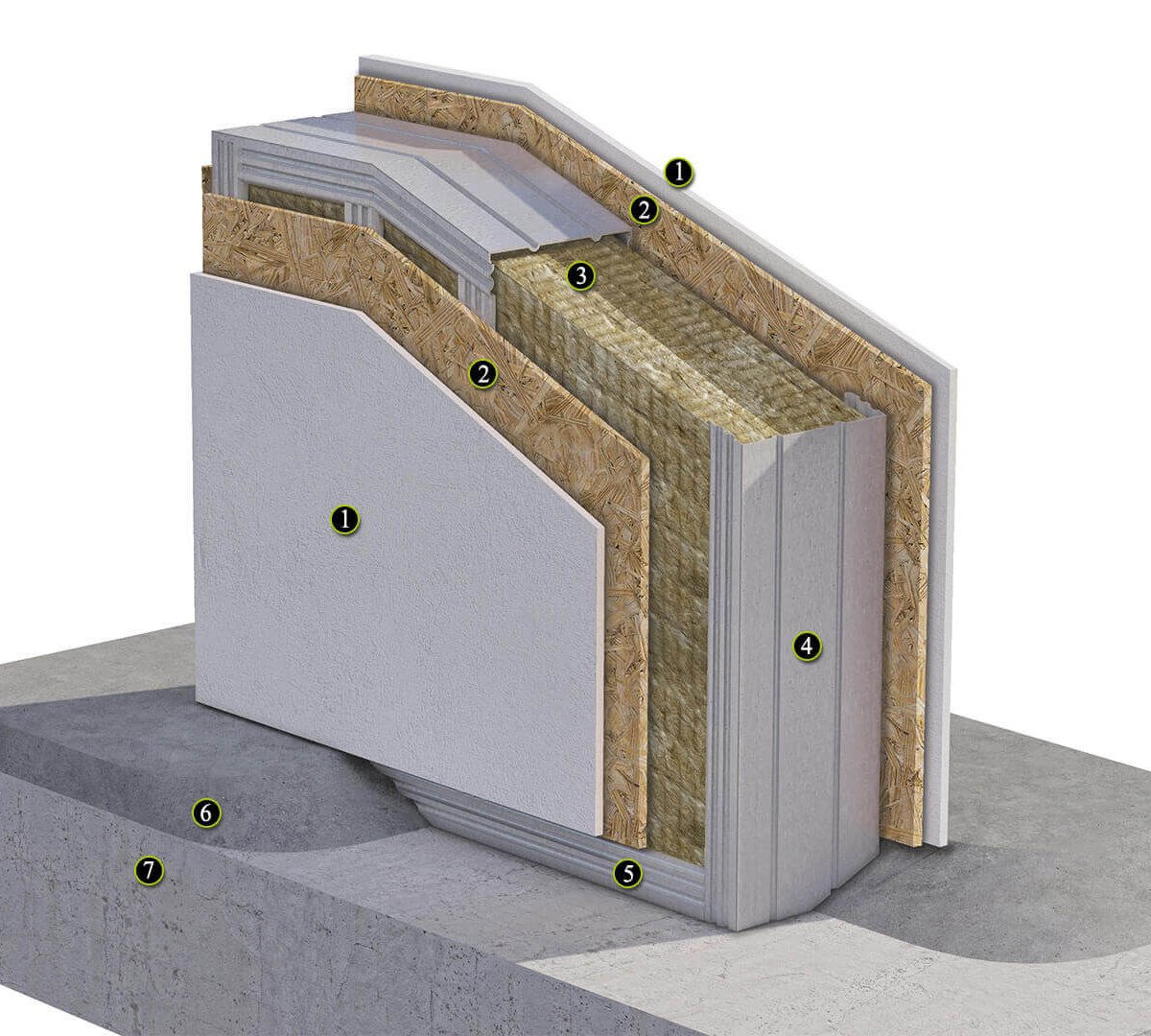
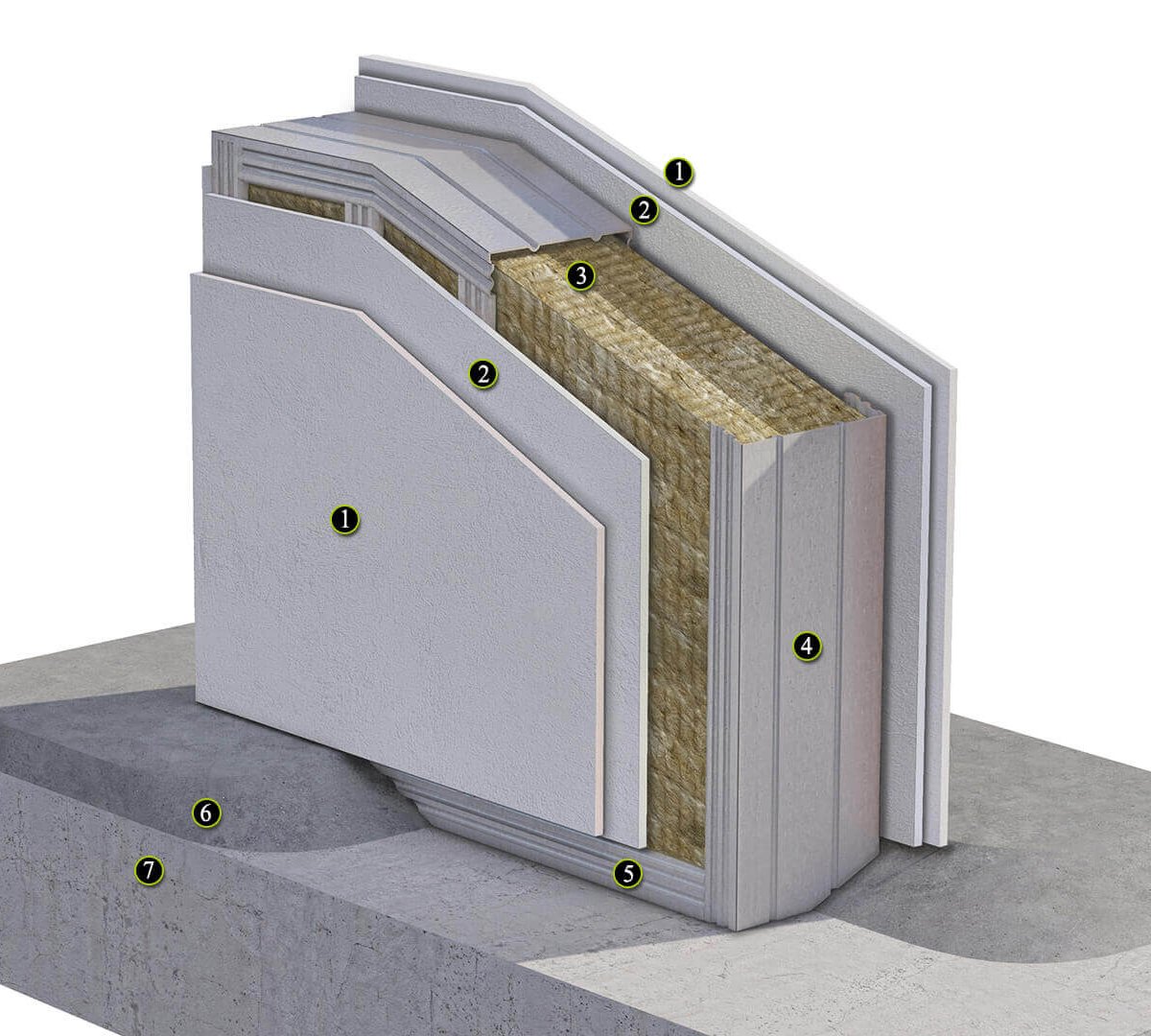
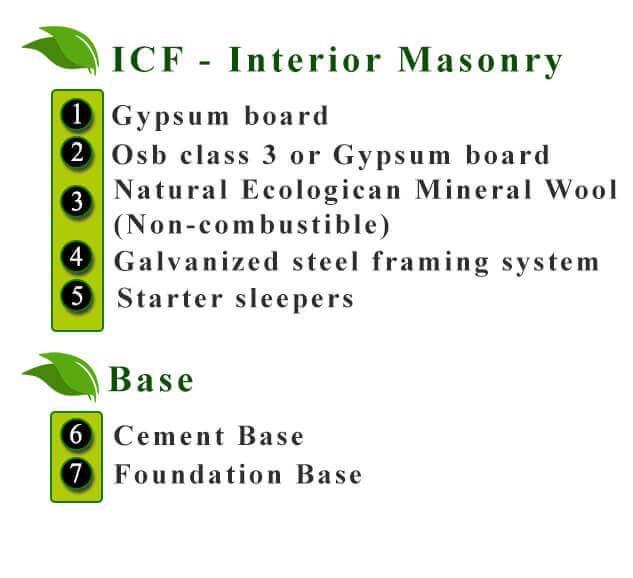
INTERIOR WALL – ICF

OSB AND GYPSUM BOARD

DOUBLE GYPSUM BOARD

TECHNOLOGY – MATERIALS

The most modern energy system that accompanies the Eco Smart Form System technology of Androulakis incorporates the finest construction materials available on the global market:


See here detailed construction materials, information, and their characteristics.

Material Certifications

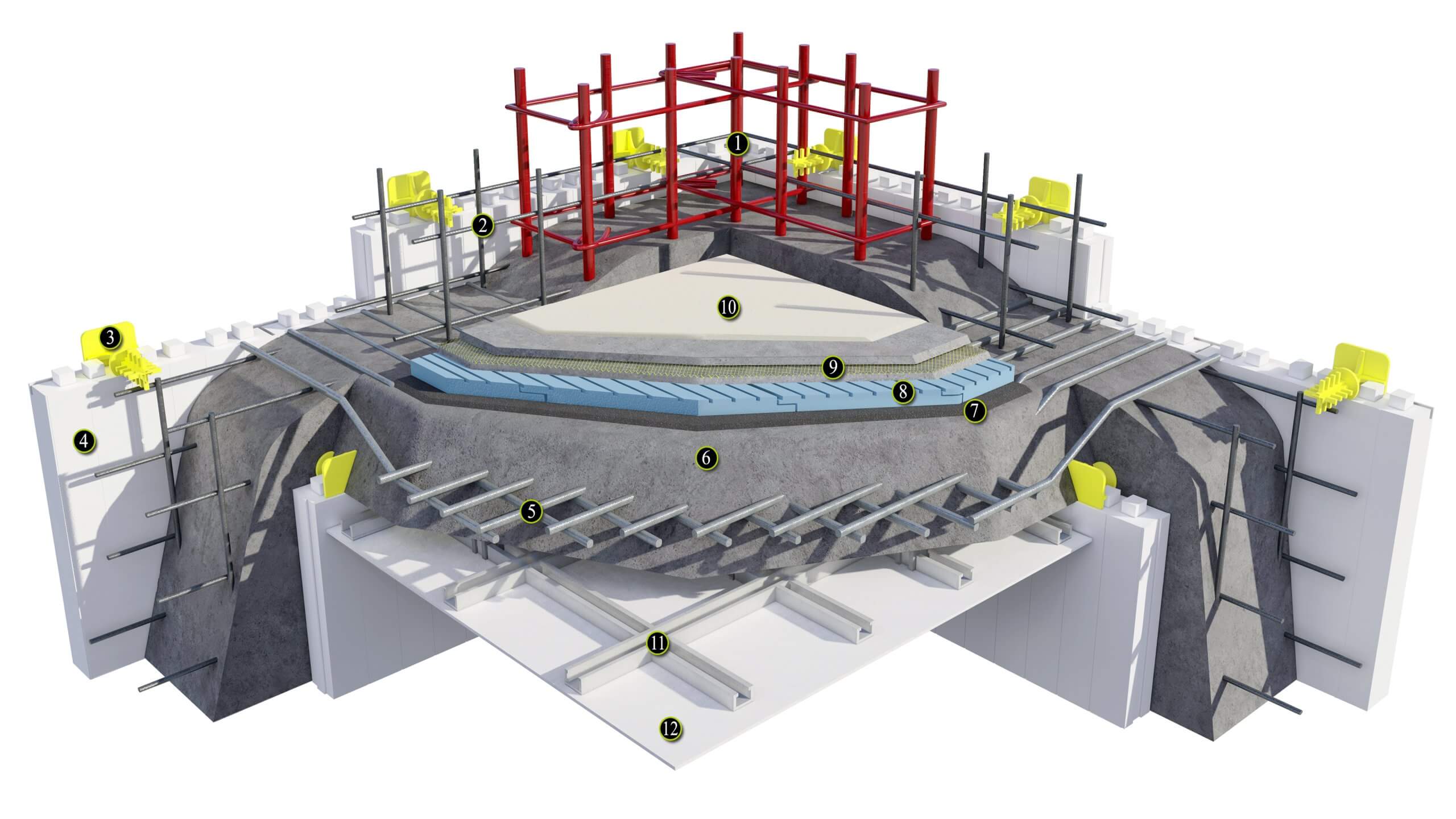
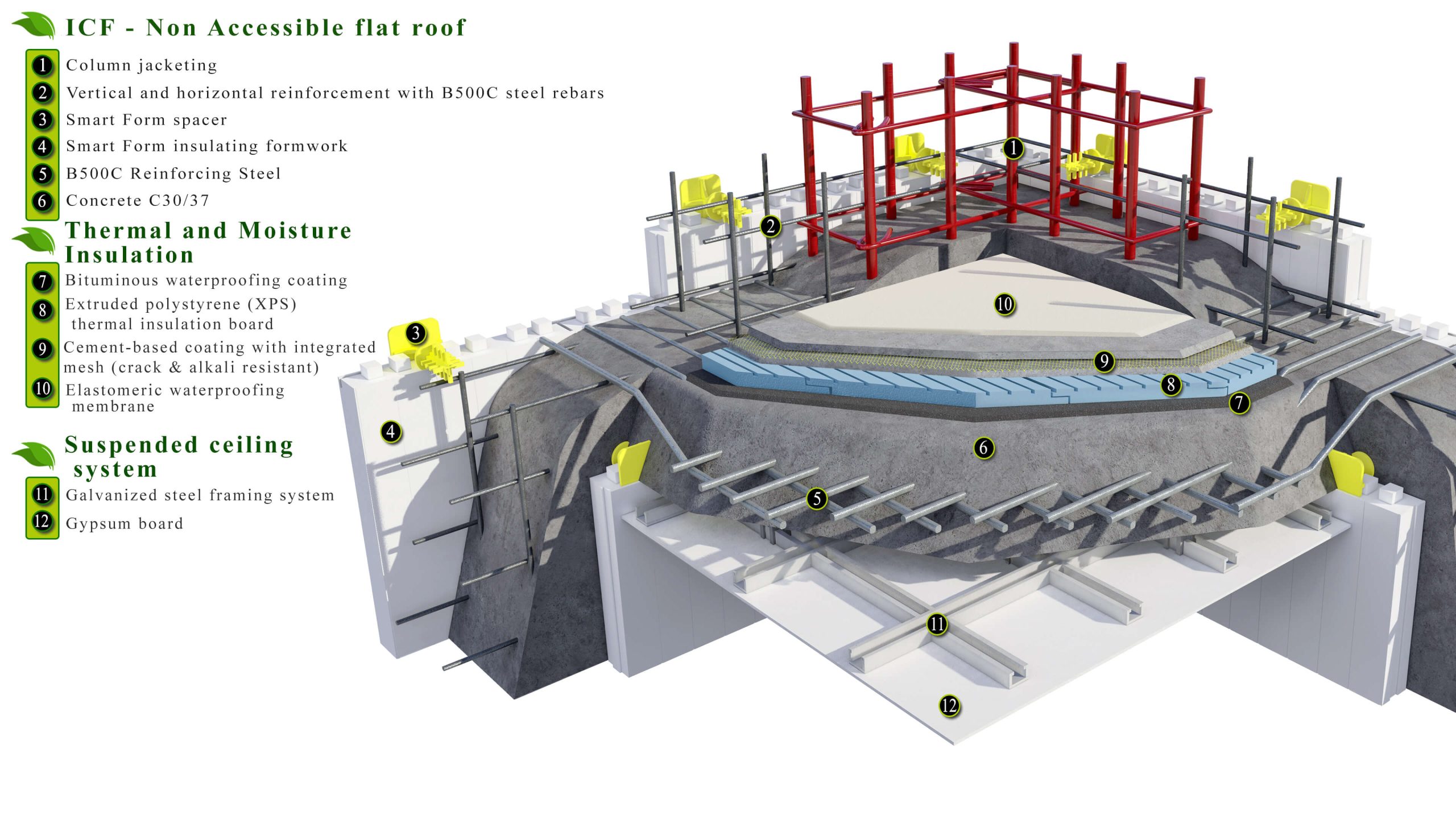
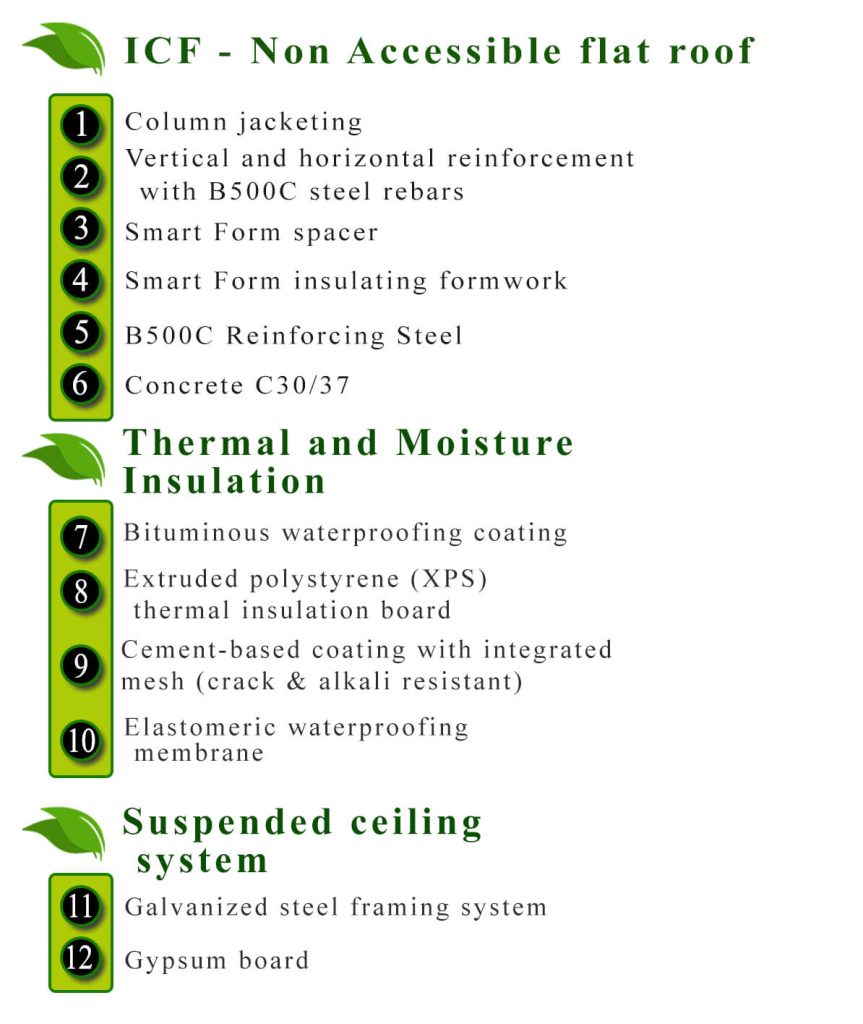
ANDROULAKIS ICF FLAT ROOF

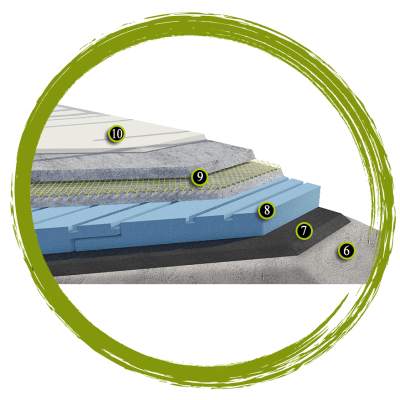
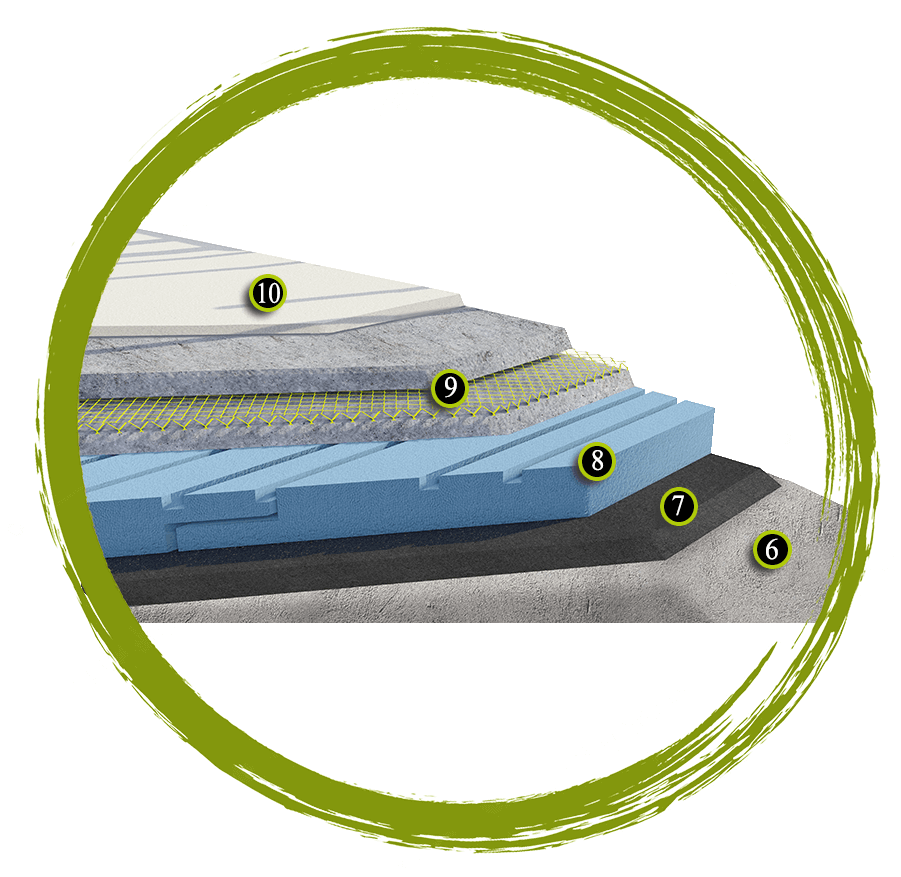
6) A ICF - δωμα - μεσοπάτωμα - Close up

TECHNOLOGY – MATERIALS

The most modern energy system that accompanies the Eco Smart Form System technology of Androulakis incorporates the finest construction materials available on the global market:


See here detailed construction materials, information, and their characteristics.

Material Certifications

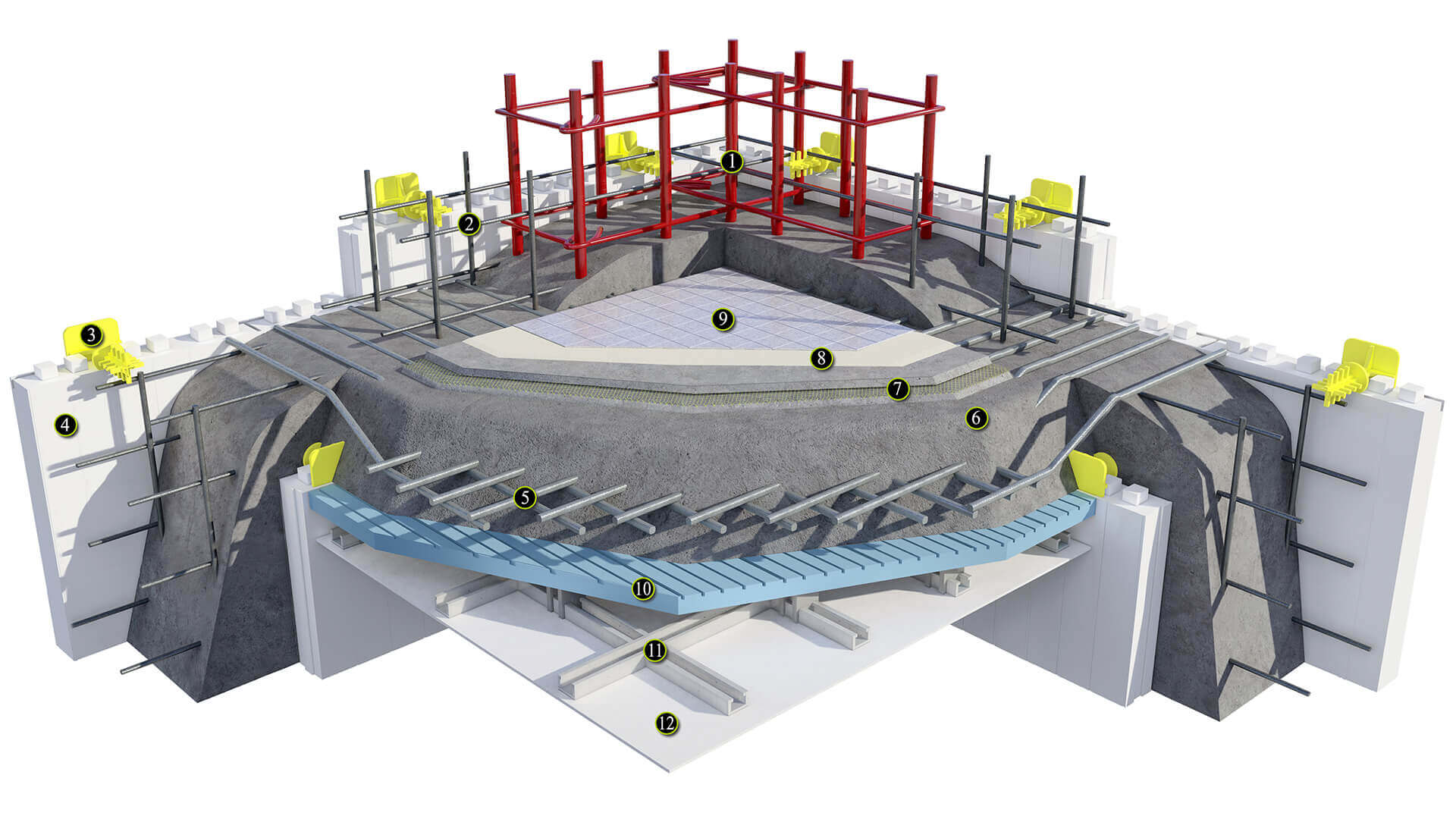
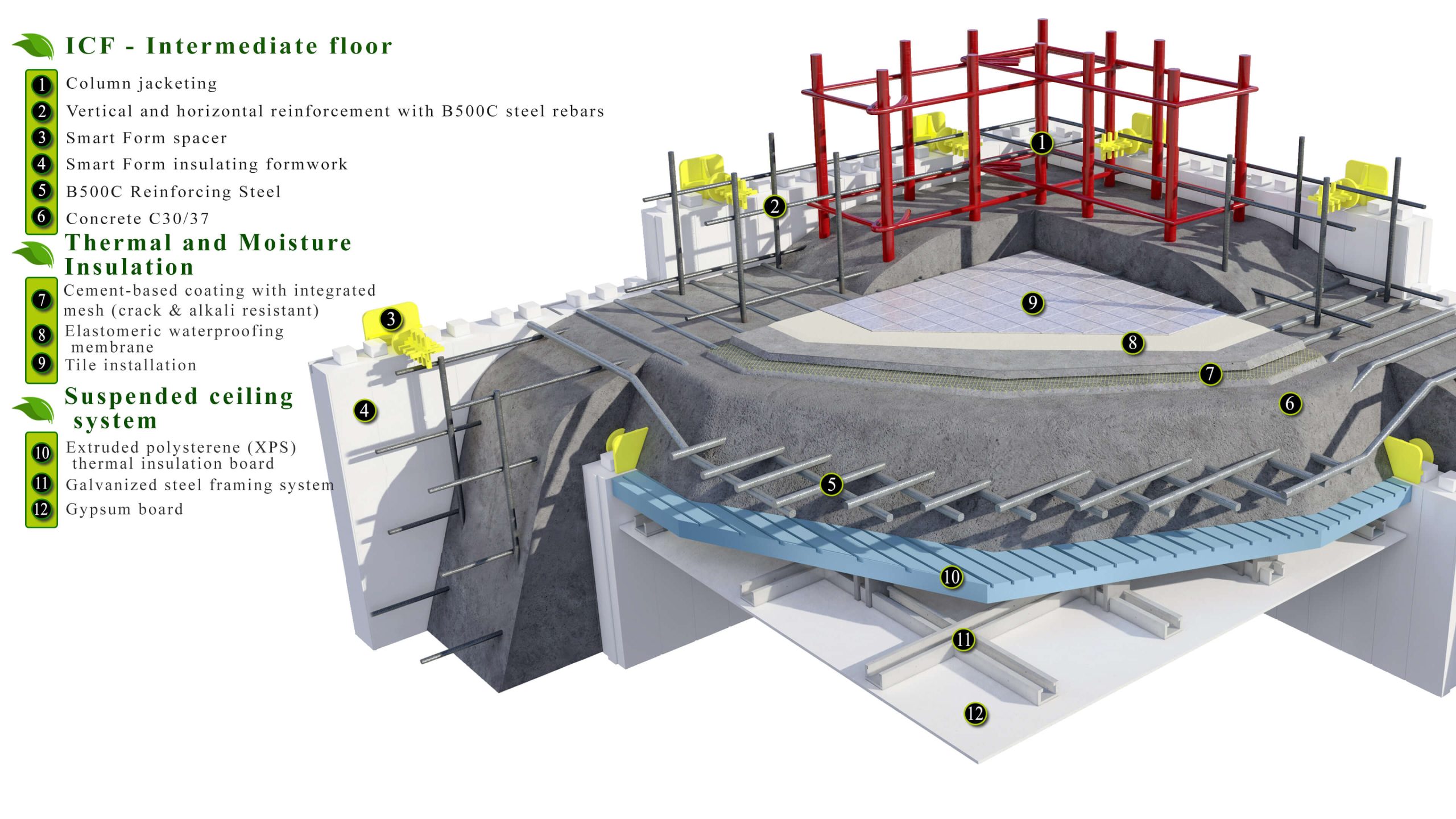
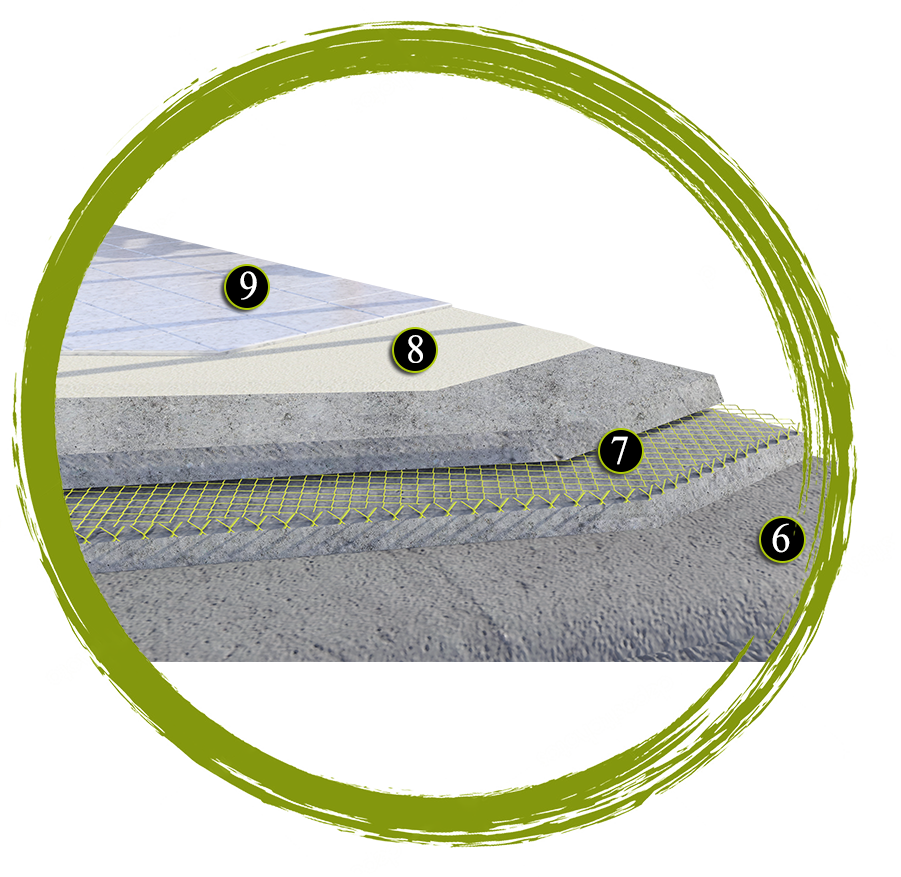
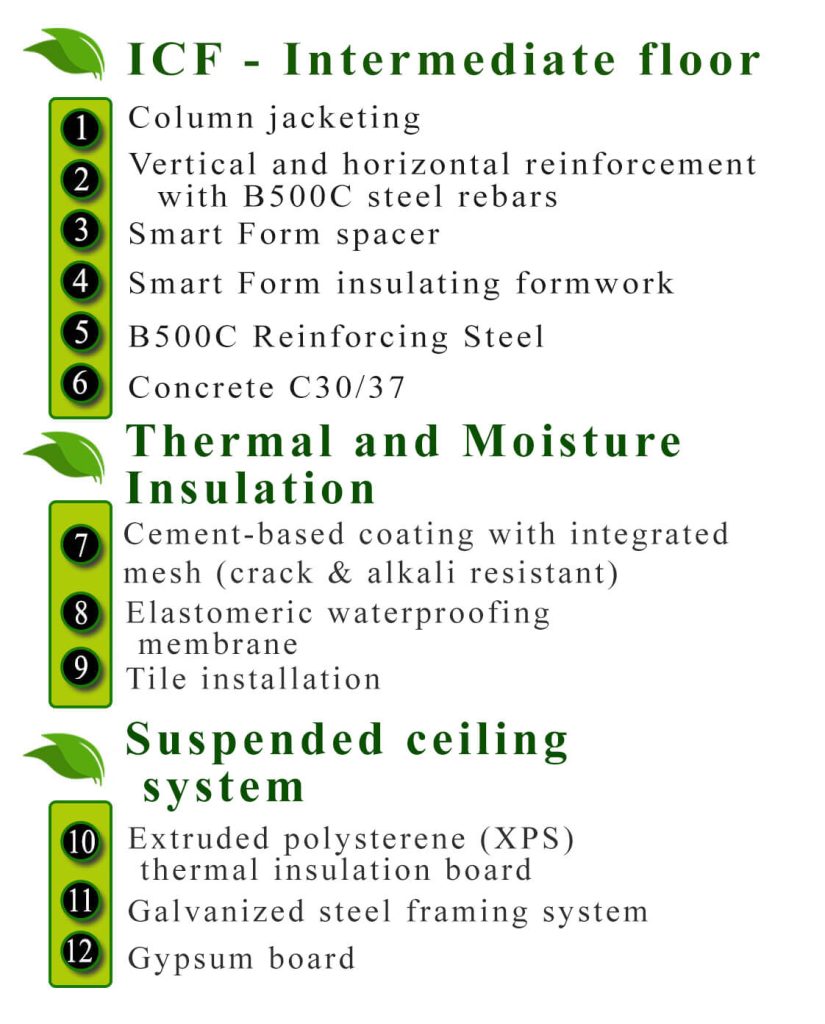
ANDROULAKIS INTERMEDIATE FLOOR SLAB

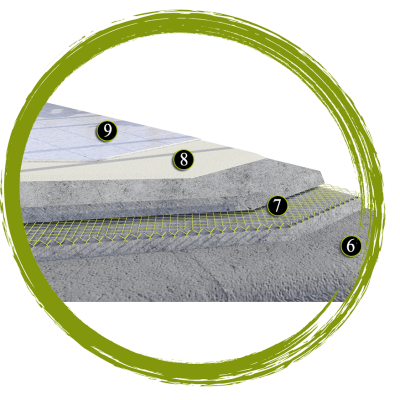
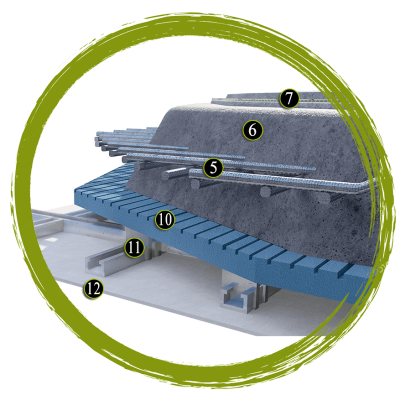
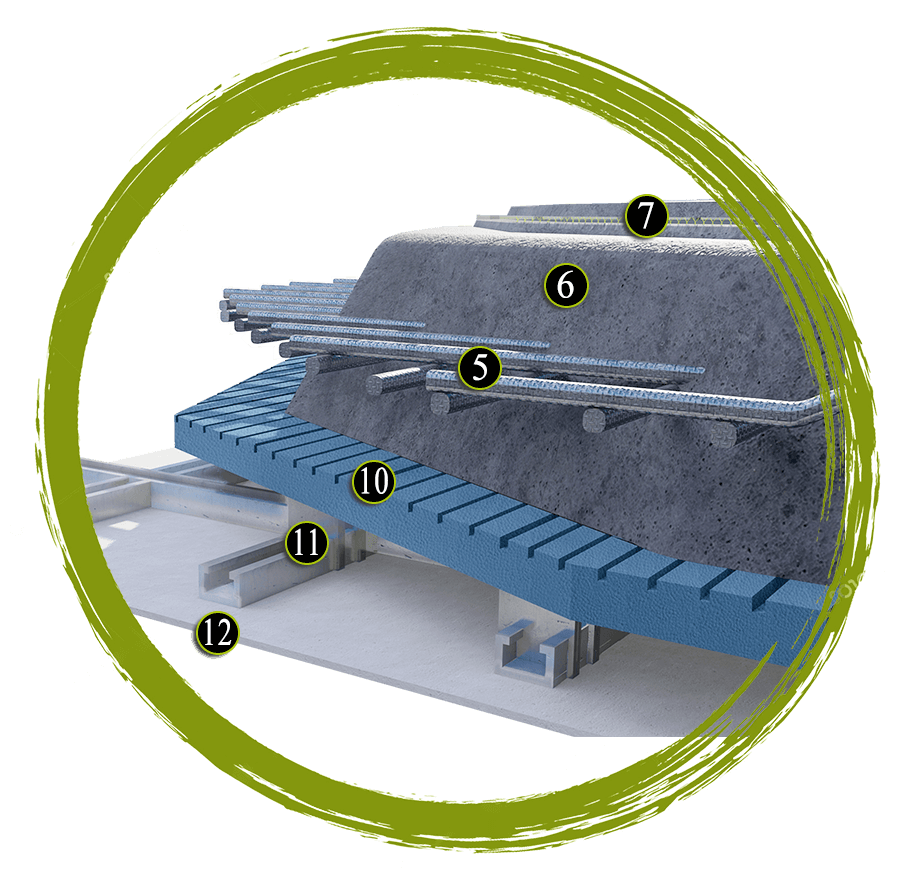
6) A ICF - μεσοπάτωμα - Close up 2
6) A ICF - μεσοπάτωμα - Close up

TECHNOLOGY – MATERIALS

The most modern energy system that accompanies the Eco Smart Form System technology of Androulakis incorporates the finest construction materials available on the global market:


See here detailed construction materials, information, and their characteristics.

Material Certifications

ENERGY CLASSIFICATION

Androulakis ICF technology corresponds to Energy Class A homes.

The company has integrated control stages into the construction and completion of the project (Structural Study, Simulator, Air Tightness Test), which confirm the A+ classification and secure the high energy independence of the residence.

Energy Class A has gradations.

A green building residence with the same energy class (Class A+) as another may have significant differences in the level of required energy performance.

The classification of ICF residences is determined by the calculation software of the regulation (KENAK).

As a reference and for comparison, an ideal building of Energy Class B with specific insulation and technical characteristics is used.

We therefore compare the examined residence with this ideal building, and depending on the comparisons, the energy class category and its percentage grading are determined:

  • Class A+: 67% lower consumption than Class B

  • Class A: 50% – 67% lower consumption than Class B

  • Class B+: 25% – 50% lower consumption than Class B

  • Class B: 0% – 25% lower consumption than Class B

ICF residences of our company, taking into account individual factors such as design, location, and the microclimate of the area, are classified in Energy Class A and meet the requirements set by the Passive House Institute.

* The energy requirements of the residences are calculated based on total primary energy consumption for heating, cooling, and domestic hot water.

* The exact grading and calibration of the residence result after the completion of control and testing stages.